
Atlantic City Resident Lookup Sources
No single official database lists every Atlantic City resident. Each source answers a narrow question instead. The New Jersey registration check can confirm a matching registration record on the date you search it. Assessment data ties owners to parcels. The Atlantic County Clerk public-records search connects a recorded party to a dated document, while courts, vital records, probate files, and state business listings each show a person in a different role. Read the role beside the name, because an owner, a voter, an executor, and a business officer are not interchangeable identities.
| Record trail | What it can confirm | Official keeper | Access boundary |
|---|---|---|---|
| Registration check | A matching registration record and its system status | NJ Voter Information Portal | Controlled first-name, last-name, and month/year query |
| Assessment and deed index | Parcel owner, mailing context, or recorded party role | Atlantic County assessor and Clerk | Owner is not necessarily the current occupant |
| Court docket | Party role and procedural event in a case | NJ Courts and local vicinage | Case-family limits, redactions, and missing documents apply |
| Vital or probate record | A recorded life event or estate connection | Local Registrar, state, or Surrogate | Eligibility, ID, and record-type rules control copies |
| Business filing or license | A formal entity or credential connection on a filing date | NJ Treasury or licensing agency | Business or agent address is not residence proof |
Start with the smallest source that fits the fact you already hold. An address plus a tax year points toward the county assessment route. A case number belongs with the courts. Historic vital questions belong with the registrar or the state genealogical process. Probate and estate files route through the Atlantic County Surrogate, subject to the record type and its access limits. This keeps each search anchored to a source. Loose name hits do not merge into one claim. A disciplined lookup resists that drift.
Note: When comparing two Atlantic City records, keep the source date, record type, name spelling, and the person's stated role.
Atlantic City Court Name Routes
The NJ Courts Find a Case page routes civil, foreclosure, criminal, judgment, Tax Court, and municipal searches to separate systems. It is a map, not a promise. Not every document image is public. Atlantic City sits in the Atlantic/Cape May Vicinage. When an online result is incomplete, the vicinage can handle a docket or record request. Recent municipal matters carry a wrinkle. The Atlantic City/Pleasantville Joint Municipal Court began on January 1, 2024, so the court name and route can differ across time.
| Public Access Case Jacket control | How to read it |
|---|---|
| Party Name | Individual or Business choice, with last and first name required and middle initial optional |
| Docket Number | Case county, docket type, number, and year place the matter in its procedural setting |
| Judgment | A separate route for judgment searching, not a substitute for reading party role |
| Name length | Two or fewer characters in both name fields is exact-only; three or more characters broadens the range |
"No records found" describes the spelling, county, case type, dates, and fields you submitted, nothing more. Try an alternate spelling next. An initial or the individual/business choice can also fit the record question. Retain the exact criteria and access date. A docket entry is only a lead. The electronic jacket can include complaints, motions, briefs, orders, notices, and judgments, though some criminal, confidential, or paper-era items may stay out of view.
- Party and role: read the displayed person or business with the plaintiff, defendant, petitioner, or respondent role.
- Case placement: retain the case type, county, docket number, and docket year together.
- Dates: preserve filing, order, proceeding, and access dates beside the party name.
- Document status: note whether a listed complaint, motion, order, notice, or judgment is available or excluded.
Atlantic City Voter Lookup Fields
The state registration check asks for a first name, an optional middle initial, a last name, and a birth month and year in MM/YYYY form. That date field is a search credential. Do not copy it into a returned result. Official examples describe a returned address, county, registration-effective or voting-privilege date, and current status. Every field is date-sensitive. An inactive status is an election-administration label, not proof that someone permanently moved or lives at an address today.
| Registration-check field | Access rule or meaning |
|---|---|
| First Name and Last Name | Required fields; spelling alone does not uniquely identify a person |
| M.I. | Optional field that can narrow a result when it is part of the record |
| DOB month/year | Required MM/YYYY search input; do not publish it as a result detail |
| Address, city, and county | Shown in official examples; handle as protected, date-sensitive information |
| Effective date and status | Registration timeline and system status, not proof of current physical occupancy |
Use the official New Jersey voter lookup with the subject's known identifying details. Retain the access date. The form confirms one record at a time.
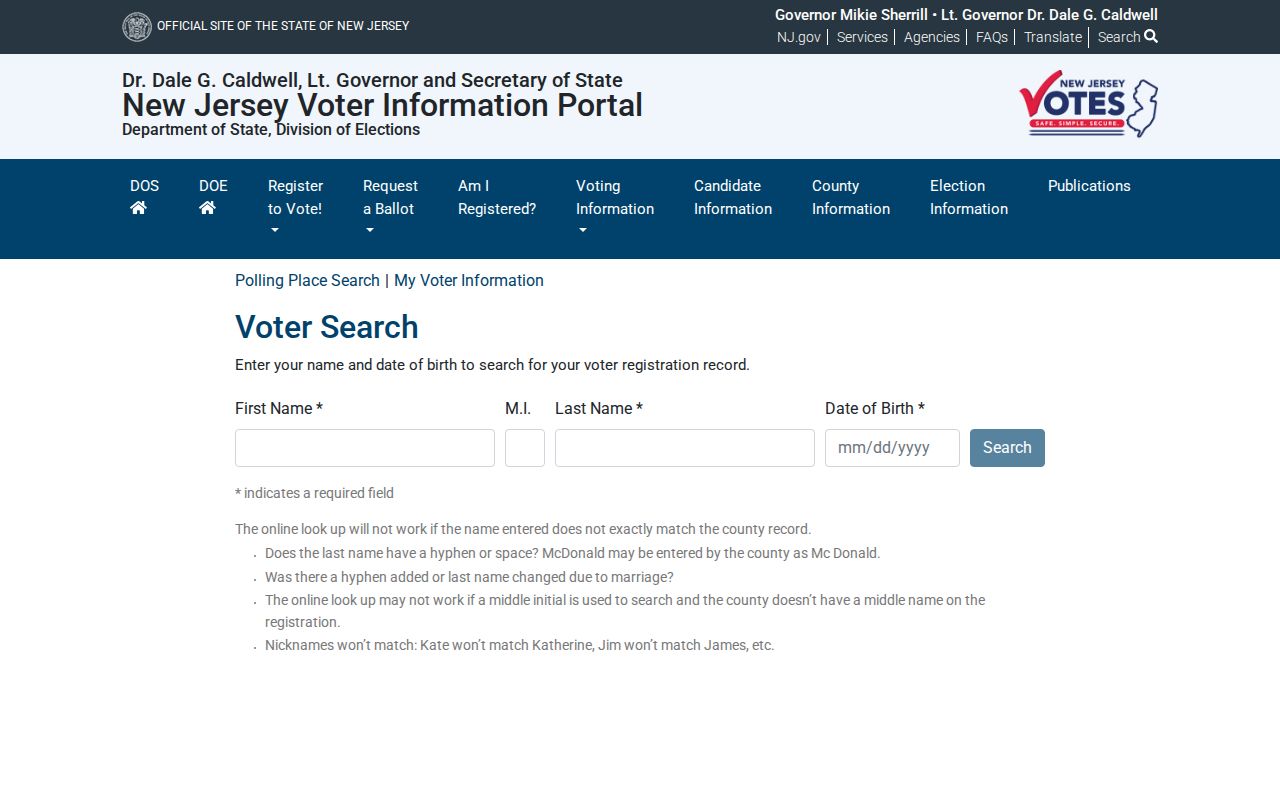
A returned result still needs a second anchor. Compare the city and status against an independently dated source before drawing any conclusion. Voter-record maintenance in the county runs through the Atlantic County Superintendent of Elections. That office handles record requests and form questions.
Verifying an Atlantic City Resident
Anchor the name to a place and time first. Only then add more records. For an owner connection, compare the county assessment tax year with the parcel's block and lot, then read the deed index for the recorded party role. For a court connection, keep the county, case family, docket year, and party role together. A common name demands corroboration. Two signals at minimum help, such as a middle initial plus a street, a spouse or relative named in a historical source, an occupation, a parcel, or a dated event. Weak matches stay unconfirmed.
- Write the exact name, alternate documented spelling, approximate date, and Atlantic City address that you are testing.
- Use the county assessment or deed index to identify the parcel, tax context, recorded instrument, and owner or party role.
- Search the appropriate court case family or voter confirmation route, recording the fields entered and the date searched.
- Use the registrar, Surrogate, or historical collection only when the record question and eligibility rules fit the event.
- Docket
- A court’s identifying number for a case, used with its county, type, and year to locate the procedural record.
- Index and image
- An index is a searchable entry that points to a record. An image is the scanned or viewable document itself, and may be unavailable even when the index exists.
- Certified copy
- A copy issued or certified by the record custodian for the purpose allowed by that office’s rules.
Historical residents take different tools. The Heston Room's directories, newspapers, census schedules, atlases, and Sanborn maps can each supply a dated local connection. They cannot replace current confirmation. A directory entry is one role at one date. The Atlantic City city directory route covers those historical volumes and keeps their original place labels.
Atlantic City Vital Record Eligibility
Start with the Atlantic City Local Registrar. It covers any birth, marriage, death, civil union, or domestic partnership recorded in the city. Certified copies come only for Atlantic City events. The office enforces age, relationship, and identification rules. Each certified copy costs $25. An additional copy of the same document ordered that day is $10. Mail processing runs roughly 7 to 15 business days, per the office's own estimate.
Older records follow a different route. New Jersey genealogical rules open births over 80 years through 1925. They open marriages over 50 years through 1951. They also open deaths over 40 years through 1951. A state request can proceed with just a full name, the city or county, and a year. That is all it takes. Exact dates, parents' names, or a death Social Security number stay optional. Current vital records offer no unrestricted name index. Adoption-related records run through separate authorized programs and never serve as a general name search.
The Atlantic City City Clerk is the municipal records custodian. The Clerk handles OPRA services, council records, licenses, permits, and forms. The official contact image below shows that route. It applies when a city record must be requested rather than searched.

Any records request should name the custodian and describe the record precisely. Give the name, the address or parcel where relevant. Also include the record category. Add a date range. OPRA can reach an existing record. But it cannot force an agency to build a new list. Nor can it force a new conclusion about a person.
Note: A vital-record request should state the event and the eligible relationship. A matching name alone does not authorize release.
Atlantic City Resident Lookup Roles
A name search that returns nothing is not a final answer; document it instead. Record the portal, the spelling, county, date range, and case type or parcel. Add the search mode and access date. The clerk index accepts party-name variants. It also takes legal town, lot, block, or map number lookups. Court name behavior shifts with short strings. The voter portal works from month and year rather than a full date. Any one of these quirks can explain an absence without proving the person never lived in Atlantic City.
A source matrix guards against common-name errors. Track columns for the name as printed, source and year, place, role, and date. Add record identifier, confidence, and contradiction. A deed grantor, a tax owner, a directory subject, a voter, a court party, and a business officer can be six different people. They might all share one name. The New Jersey business status route confirms an entity connection, agent, or officer. That status holds as of a filing date. A business address, though, proves nothing about where a person lives.
Atlantic City License Lookup Limits
An official license or entity record answers a narrow identity question when the category fits. The New Jersey license-services index routes users to regulator-specific directories. These cover alcoholic beverage, Consumer Affairs, gaming, medical, and other licensing families. Fields and public scope vary by regulator. Atlantic City license or permit activity can surface a licensed entity. It may also show premises, applicant, status, and date. It cannot establish a home address or current presence in the city.
The city clerk handles ABC transfer and renewal work. Licensing and Inspection covers mercantile-code, permit, inspection, and demolition functions. The city publishes no universal name-and-address portal for these records. For a specific municipal record, use the City Clerk or forms route with the category, premises or parcel, and date range. For state business filings, keep the entity name, filing date, registered-agent or officer role, and status rather than reading an address as a personal match.
Atlantic City Lookup Privacy Limits
Public access has its limits. New Jersey’s Address Confidentiality Program can give an eligible participant a substitute address plus mail forwarding. The street you find may not be a home address at all. Daniel’s Law adds another shield for covered judges, prosecutors, law-enforcement officers, and their families. It suppresses both addresses and unpublished phone numbers. A gap, redaction, or odd alternate listing in an Atlantic City residents directory usually signals a legal protection rather than a broken record. Treat each lookup result with that in mind. Never republish full birth dates, voter identifiers, protected addresses, complete vital record contents, adoption information, or nonpublic court material.
Lawful use. Use Atlantic City resident records for personal, lawful research, family history, estate questions, or verifying an official source. Never use a record to stalk, harass, intimidate, or harm anyone.